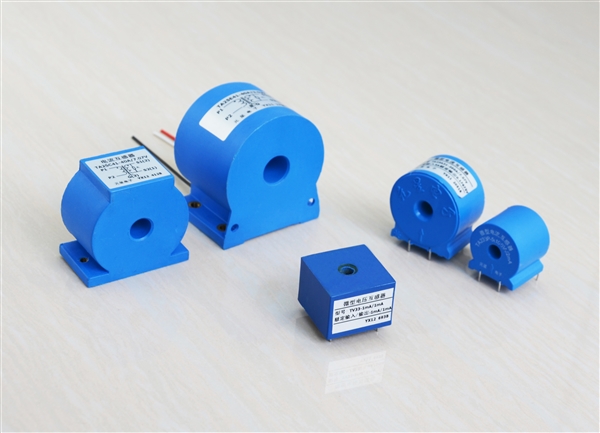
High Precision Current Transformers

Applications

  • For applications that require exceptional accuracy

Features

  • Low cost
  • Various sizes
  • Non-symmetrical mounting pattern
Download Datasheet

Download Datasheet

  • Rated input current:
    1A, 5A, 10A, 20A, 50A, 100A
  • Rated output current:
    1mA, 2mA, 2.5mA, 5mA, 10mA, 20mA, 50mA
  • Rated load resistance:
    10Ω, 20Ω, 50Ω
  • Frequency:
    50Hz to 5kHz
  • Accuracy class:
    current transformers class 0.01 or 0.02 (as defined in IEC 60044-1 Part 1)
  • Operating temperature: -25 to +55℃ / (optional) -40 to +85℃
  • Isolation current:
    2500V for 1 minute
  • Dielectric resistance:
    1000MΩ @ 500 Vdc
  • Surge withstand:
    5000V
  • Case material:
    PBT (UL flame retardant rating 94-V0)
  • Interior insulation material:
    epoxy
  • RoHS compliant

Product Overview

YuanXing’s High Precision Current Transformers deliver exceptional measurement accuracy, achieving class 0.01 and 0.02 per IEC 60044-1. Supporting rated inputs from 1A to 100A and frequencies up to 5kHz, these sensors feature 2500V isolation and 5000V surge withstand. Encapsulated in UL94-V0 PBT resin with epoxy insulation, they ensure durability in industrial environments. Available in PCB or bolt-on mounting, these low-cost components are ideal for precision power monitoring and metering systems. The non-symmetrical mounting pattern ensures extreme precision.

    Let’s Build Reliable Engineering Together

    By clicking "Request a Quote", you agree to our Privacy Policy.

    Thank you!

    Your request has been successfully submitted.

    Frequently Asked Questions

    Honeywell needed a stable and highly accurate way to measure current fluctuations in large commercial buildings. Existing sensors often produced noise and drifted over time, creating errors in smart energy dashboards

    Honeywell needed a stable and highly accurate way to measure current fluctuations in large commercial buildings. Existing sensors often produced noise and drifted over time, creating errors in smart energy dashboards

    Honeywell needed a stable and highly accurate way to measure current fluctuations in large commercial buildings. Existing sensors often produced noise and drifted over time, creating errors in smart energy dashboards

    Honeywell needed a stable and highly accurate way to measure current fluctuations in large commercial buildings. Existing sensors often produced noise and drifted over time, creating errors in smart energy dashboards

    Honeywell needed a stable and highly accurate way to measure current fluctuations in large commercial buildings. Existing sensors often produced noise and drifted over time, creating errors in smart energy dashboards