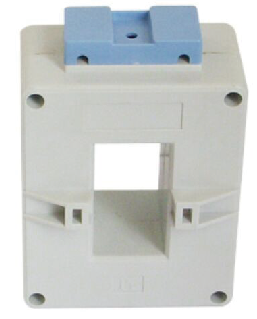
Current Transformers for Busbar

Applications

  • Current signal acquisition in low voltage distribution system.

Features

  • Low cost
  • 6 size available
  • Various input signal options
  • Fixed installation
  • The core is built from cold-rolled silicon steel strips, without air gaps.
  • The secondary winding is uniformly wound, resulting in minimal magnetic leakage.
Download Datasheet

Specifications

  • Input current:
    5 to 6300A
  • Output current:
    5A or 1A
  • Case material:
    ABS or PC
  • Frequency:
    50-400 Hz
  • Operating temperature:
    -40 to +85℃
  • Operating voltage:
    600V AC
  • Dielectric strength:
    2500V AC/min
  • Accuracy class:
    class 0.2, 0.5, 1.0 (IEC 61869-2 complaint)
  • RoHS compliant

Product Overview

YuanXing Electronics manufactures a Current Transformer for Busbar with a very high level of accuracy. The busbar current transformer has been specifically designed to provide excellent current signal acquisition optimally within a low voltage distribution system. The unit features a core made of cold-rolled silicon steel strips manufactured without any air gaps; this provides the transformer with maximum magnetic permeability. The secondary winding is wound uniformly, which provides the bus bar CT with minimal magnetic leakage and therefore makes it a trusted component for key monitoring of energy.

The busbar type current transformer has been designed to have a very broad input range (between 5 A and 6300 A) along with standard output options (5 A and 1 A) for maximum versatility within the broad range of metering options available in the industrial market. In addition, the housing is made of high-density ABS or PC to ensure that the device will operate reliably within the temperature range of -40°C to +85°C. Furthermore, the busbar current transformer can reliably operate within the frequency range of 50 Hz to 400 Hz and at an AC voltage level of 600 V with a dielectric strength of 2500 V AC/min.

The current transformer busbar type meets IEC 61869-2 standards, has an accuracy class (0.2, 0.5, or 1.0 respectively), and is available in six different sizes to be used for fixed installation (RoHS compliant). The busbar current transformer has the long-term reliability and accuracy needed to support today’s modern industrial electrical grid.

Typical Products

Image Part Number Rated Input (A) Turn Ratio Frequency (Hz) Secondary Burden (Ω) Accuracy Class Dimensions (mm) PDF
Image TA1111 5~30 1000:1
2000:1
2500:1
50 to 400 ≤200 0.1
0.2
0.5
ID-L-W-H 7.0-22.0-18.0-23.0
Image TA1311 5~80 1000:1
2000:1
2500:1
50 to 400 ≤800 0.1
0.2
0.5
ID-L-W-H 7.0-22.0-18.0-23.0
Image Part Number Rated Input (A) Turn Ratio Frequency (Hz) Secondary Burden (Ω) Accuracy Class Dimensions (mm) PDF
Image2 CTT0150 5-150 1:1000
1:2000
1:3000
1:5000
50 to 400 50-400 0.1
0.2
15-58-23-45

    Let’s Build Reliable Engineering Together

    By clicking "Request a Quote", you agree to our Privacy Policy.

    Thank you!

    Your request has been successfully submitted.

    Frequently Asked Questions

    Honeywell needed a stable and highly accurate way to measure current fluctuations in large commercial buildings. Existing sensors often produced noise and drifted over time, creating errors in smart energy dashboards

    Honeywell needed a stable and highly accurate way to measure current fluctuations in large commercial buildings. Existing sensors often produced noise and drifted over time, creating errors in smart energy dashboards

    Honeywell needed a stable and highly accurate way to measure current fluctuations in large commercial buildings. Existing sensors often produced noise and drifted over time, creating errors in smart energy dashboards

    Honeywell needed a stable and highly accurate way to measure current fluctuations in large commercial buildings. Existing sensors often produced noise and drifted over time, creating errors in smart energy dashboards

    Honeywell needed a stable and highly accurate way to measure current fluctuations in large commercial buildings. Existing sensors often produced noise and drifted over time, creating errors in smart energy dashboards